
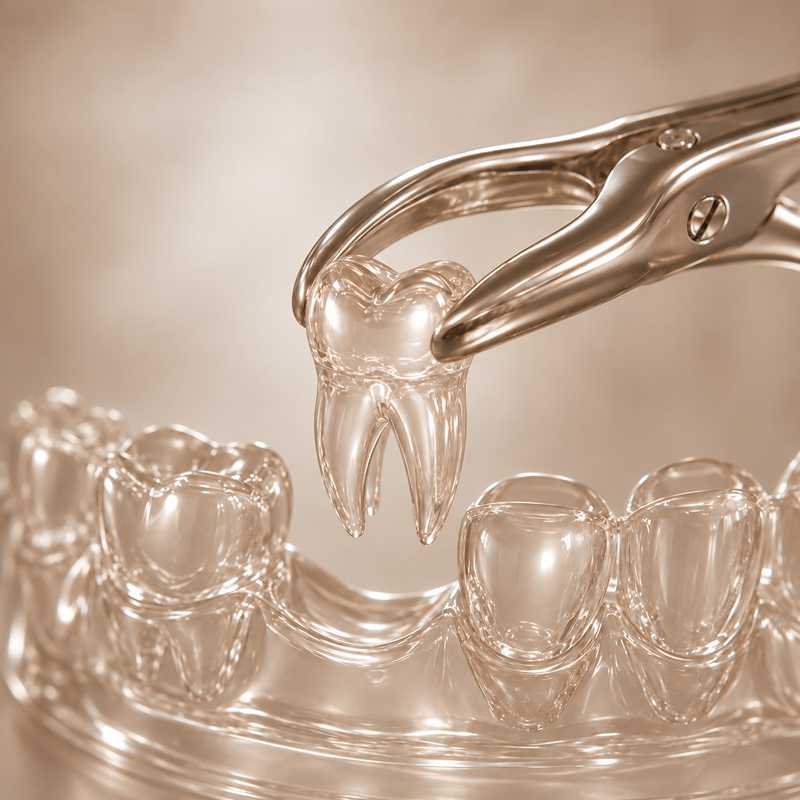
The thought of oral surgery can cause anxiety for many people; however, in modern dentistry, oral surgery is no longer primarily about pain. The aim of oral surgical treatments is to eliminate foci of infection and deep-seated inflammation in the oral cavity, safely remove teeth that cannot be saved or are causing problems, and lay the foundations for subsequent tooth replacement (implantation) or orthodontic treatment.
At Gere Dental’s clinics in Budapest (in the 13th and 16th districts), we place particular emphasis on gentle, tissue-friendly techniques and a stress-free atmosphere. We use state-of-the-art 3D CBCT (computed tomography) diagnostics, computer-aided planning and highly effective local anaesthetics, ensuring that all our oral surgery procedures are completely pain-free.
What problems do our oral surgery treatments address?
Severely damaged or irretrievable teeth
When treatments to preserve the tooth are no longer effective, the gentle removal of the tooth eliminates the source of the problem and protects the neighbouring teeth.
Problem wisdom teeth, impacted wisdom teeth
Surgical exposure and removal of teeth that are growing poorly due to lack of space, causing throbbing pain or inflammation.
Inflammation and cysts around the root apex
Preserving tooth structure through oral surgery when conventional root canal treatment is no longer sufficient.
Our oral surgery solutions at Gere Dental
Tooth extraction
What problem does it solve?
It removes teeth that cannot be saved due to deep decay, severe periodontal disease or a longitudinal root fracture, and creates space for orthodontic treatment.
How do we go about it?
After administering thorough local anaesthesia, we carefully widen the tooth socket using precision instruments, then gently extract the tooth. We clean and disinfect the wound to ensure complication-free healing.
Duration of treatment
Depending on the anatomy of the tooth, it takes just 10–20 minutes.
Surgical tooth extraction
What problem does it solve?
It eliminates deep-seated sources of infection, inflammation around fractured roots and symptoms caused by teeth trapped in the bone.
How do we go about it?
Under local anaesthetic, we make a small incision in the gum, expose the tooth root and gently remove it. After cleaning the wound, we close the gum with stitches as fine as a hair (the stitches are removed after 7–10 days).
Duration of treatment
Depending on the complexity of the procedure, it takes approximately 30–50 minutes.
Wisdom tooth extraction
What problem does it solve?
It eliminates recurrent gum inflammation, throbbing pain and facial swelling, and protects the adjacent molars from tooth decay and the teeth from crowding.
How do we go about it?
We plan the operation using 3D CBCT scans to ensure the protection of the nerve pathways. Under local anaesthetic, we expose the tooth, extract it in several pieces if necessary, and then close the wound with precise sutures.
Duration of treatment
It usually takes between 20 and 45 minutes per tooth, depending on the position.
Root-apex resection (Resectio)
What problem does it solve?
It eliminates chronic inflammation (granuloma, cyst) around the root apex that conventional root canal treatment has been unable to resolve.
How do we go about it?
Under local anaesthetic, we make a small opening in the bone at the root tip and remove the very end of the root and the inflamed tissue. If necessary, we seal the root canal from the back (retrograde), then close the wound. It is completely painless.
Duration of treatment
30–40 minutes
Frequently Asked Questions
Will the operation or tooth extraction hurt?
Not at all. We use modern local anaesthetics that completely block the sensation of pain in the treated area. During the procedure, you may feel only slight pressure or tightness.
What do I need to bear in mind after oral surgery?
On the day of the operation, you should avoid physical exertion, coffee, alcohol and smoking. You must not suck or rinse the wound, and it is also advisable to avoid milk and dairy products for 2–3 days due to the risk of infection.
When should I come back to have my stitches removed?
The stitches are removed 7–10 days after the operation. This procedure takes just a few minutes and is completely painless.
