
As parents, we constantly keep an eye on our child’s growth and development, right from their very first steps. But when does the time come to pay more conscious attention to their smile? Many people think that orthodontics is only an issue during adolescence, yet the early detection of dental problems is of paramount importance in preventing more complex treatments later on.
In this article, we have compiled the most important signs – which are easy to spot at home – that suggest it is time to see an orthodontist.
I. Visible aesthetic and structural differences
The most obvious signs can be seen on the teeth themselves and in the way the child bites. Observe your child’s teeth whilst they are speaking or smiling, paying particular attention to the following:
- Crowded teeth: The remaining teeth emerge at an angle, overlapping one another, because there is not enough space for them in the jawbone.
- Large gaps: There are noticeably large gaps between the teeth.
- Overbite: the upper incisors overlap the lower ones too much, or protrude noticeably.
- Cross-bite: the lower teeth close in front of or alongside the upper teeth.
- Open bite: When the teeth are clenched, the back teeth touch, but there is a gap between the front teeth; they do not meet.
II. Functional difficulties in everyday life
Sometimes the problem lies not in how things look, but in how they work. It may be a warning sign if a child is struggling with the following difficulties:
- Difficulties with chewing
The child may have difficulty chewing or biting; this may be evident in the child regularly biting their own tongue or the inside of their mouth whilst eating.
- Lisping or a lisp
Misaligned teeth can cause a persistent lisp or a ‘p’ sound, as well as other pronunciation problems. In some cases, speech and language therapy alone may not be sufficient to resolve these issues, and orthodontic treatment may be required.
- Asymmetrical face
Due to a misalignment of the jawbones, a child’s face or chin may appear asymmetrical or crooked when their mouth is closed. In some cases, this can also be a sign that the child requires orthodontic treatment.
III. Telltale habits and physical symptoms
Certain everyday habits and reflexive movements have a direct impact on the development of the jawbones. Just as braces can move the teeth using gentle, sustained forces, so too, unfortunately, can certain bad habits produce a similar effect.
- Persistent thumb-sucking or pacifier use: If these habits persist beyond the age of 3 or 4, they will almost certainly cause the jawbone to become misshapen.
- Mouth breathing: If a child consistently breathes through their mouth rather than their nose whilst sleeping, whether during the day or at night (even whilst snoring), this can easily lead to the development of a narrow upper jaw.
- Swallowing with a tongue thrust: When swallowing, the tongue does not press against the roof of the mouth, but pushes against the front teeth, constantly pushing them outwards.
- Jaw clicking: If a child complains of a clicking sound or pain in the jaw joint whilst chewing or yawning.
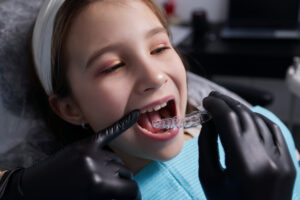
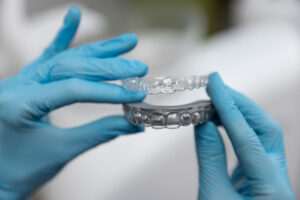
In such cases, as well as orthodontic treatment, breaking bad habits should also be included amongst the objectives. Certain appliances not only help to straighten the teeth, but also make it easy to break bad habits.
What can we do as parents?
Prevention is key. According to specialist recommendations, the first orthodontic consultation should take place at the age of 6–7, at the start of the mixed dentition phase. At this age, the jawbones are still growing, so skeletal irregularities can be corrected much more easily, quickly and painlessly with removable appliances than if we were to wait until adolescence or adulthood.
An early consultation does not mean that the child will be fitted with a device straight away. Often, regular check-ups are all that is needed so that the specialist can start treatment at the most appropriate time.
At Gere Dental, we believe in the power of prevention, which is why we offer free consultations to our youngest patients up to the age of 12.
If you have noticed even just one of the signs listed above in your child, or if you’d like to be sure, please book an appointment at our clinic for a professional, friendly orthodontic consultation!